All Posts

Fortuitous Knox

Continuing on with my love and understanding of Hockey I had begun with the press box now I delve into ownership.
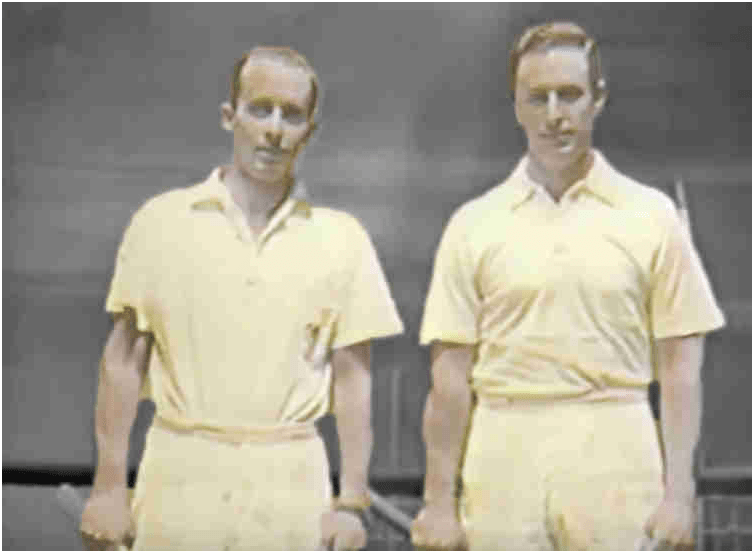
Seymour Horace Knox III and his younger brother Northrup Rand “Norty” Knox are the main reason why my city has an NHL team.

It was a frustrating process that began in the autumn of 1965 when the Knox brothers submitted their application for a team to the NHL along with 14 other applicants from nine other cities.

Ironically the brothers were told that they were the best organized and structured application with all the parameters met. Then they were placed second behind Baltimore of all places in the event one of the original six applicants withdrew.

Shortly after the 1967 expansion denial, Seymour took advantage of a financial situation by paying hundreds of thousands of dollars in reparations owed by the Oakland Seals.

This move made possible for Seymour to claim a stake in ownership and become a minority owner. Because of this Seymour was elected Alternate Governor for Oakland and could attend and participate in the NHL meetings.

When Seymour initiated a push to move Oakland to Buffalo in 1968 the NHL stated “Absolutely not”, because the NHL insisted on having Bay area teams, no matter what.

Seymour was solidifying associations and friendships with the other NHL Governors during this time and on January 20th 1969 the NHL meeting confirmed two new expansion teams would be selected.

To begin Seymour had to manage selling his share of Oakland, which was picked up by Trans-National Communications who changed the team’s name to California Golden Seals.

He then had to come up with the increased entry fee of six million dollars, and recreate the agreements and blueprints from 1965 with the city of Buffalo, then submit another bid for a team. Seymour and his brother were able to complete all of this incredibly in less than three months.
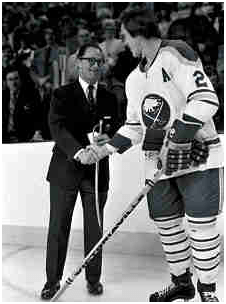
Then on December 2nd 1969 Buffalo and Vancouver were awarded NHL franchises. Seymour and Northrup Knox were the principal owners of the Buffalo Sabres from day one until two years after Seymour’s death in 1998 when Norty sold the Sabres to John J. Rigas. It was three years before his passing that Seymour was in 1993 inducted into the Hockey Hall of Fame.

Not only do I appreciate and am grateful for their efforts to bring the NHL to Buffalo, I also am thankful for Seymour’s decorated service as a Corporal in the Field Artillery during WWII.

Some people scoff at collegiate Hockey but Norty earned two NCAA Varsity letters in Men’s Ice Hockey as a goaltender for Yale University. He also was the Court Tennis World Champion from 1959-69 until he retired, and was the number one player on the 1969 US Polo Team.
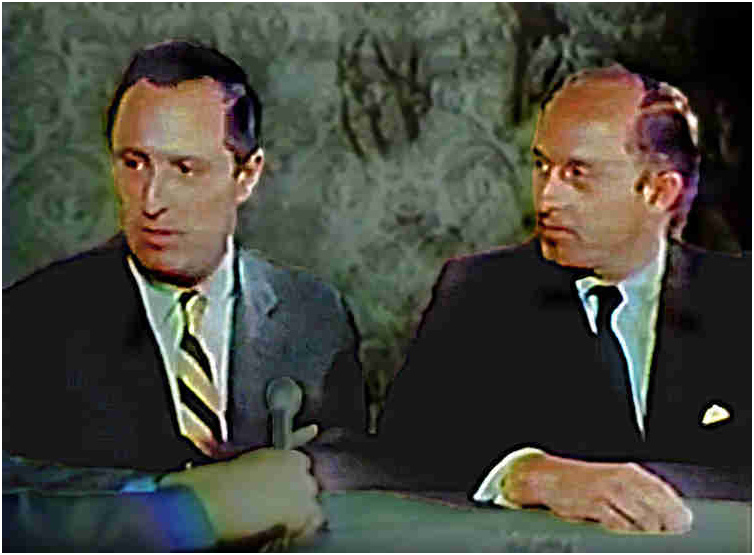
Two incredible men whom I have never met but feel indebted to and grateful for all that they accomplished for my city and making it possible for me to become a Buffalo Sabres Fanaticus.

Commentator Extraordinaire Ted Darling

I would like to pay homage to the people responsible for my love and understanding of Hockey and I begin oddly with the press box.

Out of the three Buffalo Sabres broadcasters to be recognized by the NHL Hockey Hall of Fame with the Foster Hewitt Memorial Award, Rick Jeanneret and Harry Neale are fine, but for me right from the start it has been Ted Darling, The Voice of the Buffalo Sabres.

Born in the “Limestone City” Kingston, Ontario June 9th, 1935, Edgar Lee “Ted” Darling is a 1958 graduate of Canada’s premier RTA Ryerson University Toronto.

During the 1960s, Ted worked in Sudbury, Huntsville, and Kingston radio stations, CBC Ottawa, and was hired by CBC Montreal’s Hockey Night in Canada in 1968 as an intermission host on Saturday Nights.

Preferring play-by-play over color Ted made a recording of himself broadcasting a Sabres game before the 1970-71 Season began, (which was quite a feat in of itself considering the Sabres have yet to play a game), for General Manager Punch Imlach. The result was an offer from a brand new NHL team the Buffalo Sabres to be their play-by-play broadcaster on radio and television.

It was October 10th 1970 in Pittsburgh when the Buffalo Sabres began their inaugural season with a win, and for the first time Ted Darling would be a play-by-play man for an NHL team. In the next press box over for the Canadian broadcast sat Foster Hewitt himself, an idol of Ted’s.

Ted’s voice has been described as authoritative with a soothing tone, friendly and approachable, and it was Ted’s calling of the game that night after Horton’s death I listened to with a heavy heart.

When the Sabres marched all the way to the Stanley Cup Finals in the 1974-75 Season, it was Ted’s voice emitting from my transistor radio making vivid that Quarter Finals victory over the Blackhawks and unimaginable excitement created with the Semi Finals victory over the Canadiens in Montreal.

Making his home in “Southern Ontario” at Lockport, NY, it was during the Blizzard of ’77 Ted was snowed in and called a road game for the Sabres from his family room watching on TV.

Ted related that an engineer mixed his telephone broadcast with crowd reactions and that his son assisted by keeping track of penalties and time left in the period.

As a bartender in Buffalo I would always try to have the game on during my shifts, Ted was always in my background during the 80s.

After listening and watching this man I had to read disparaging articles on Ted’s alleged alcoholism and why he was let go by the Sabres. The public came to find out that Ted was suffering with Pick’s disease and in 1991 he was relieved from broadcasting for the Sabres when the disease affected his on air work, he succumbed to the disease approximately five years later in 1996.

Nostalgia is literally pain from an old wound, how deliciously sweet it is to hear Ted Darling making the call on some recording and being transported back to my youth, if only for a moment. Then the slight twinge I feel for him when I remember he was only 61 and had to endure a disease for years before passing.

I like to think, although short, Ted Darling’s life was full and wonderful, that not only included Family and Hockey but he was able to translate his love for both through his broadcasts to not only myself but literally thousands of other Western New Yorkers and Southern Ontarians.